Modelling & Optimization
Mathematical models, optimization solvers, and the platforms around them.
- Mathematical/Economic Modelling
- GAMS
- Stochastic Optimization
- ML in optimization
I build clean things.
Modelling·Machine Learning·Software
Download CV
Building a model is one job; building the software it lives inside is another — and they usually belong to two different people. I'm both.
I work across mathematical and economic modelling, machine learning, and the platforms that put them to work. Recently that's meant operations research at GAMS — on the team behind GAMSPy, their Python optimization library — and economic-modelling platforms, one built for a Ministry of Tourism.
Earlier: a master's thesis using neural networks to find new uses for approved drugs, and a run of roles turning messy industrial problems into working systems. Different fields; the same shape of problem each time.
Everything below is real work — the projects, the experience, even the puzzle a few screens down, which is a genuine optimization solver, not a decoration. If you've got a problem that needs the modelling and the engineering in one head, the form at the bottom reaches me directly.
Research, consulting, and the factory floor — every role has circled the same question: how do you make a system run better?
I work(ed) with
Economic modelling and platform development. Built a CGE — computable general equilibrium — modelling platform, a Tourism Satellite Account toolkit for a Ministry of Tourism, and a structured tender-pricing platform for the firm's pricing team. Also ran product management across several products and led the team on two of them.
My education traces one idea across two fields: optimization, then intelligence.
The foundations — operations research, optimization, and the discipline of making real systems run efficiently.
Specialized in artificial intelligence — with a thesis on drug repositioning using Siamese neural networks.
Less interested in the labels than in picking up whatever the problem needs. Most of these I've shipped to production; a few I'm still learning in earnest.
A master's thesis, platforms built for real clients, and an open-source library — a cross-section of modelling, machine learning, and software.

Master's Thesis
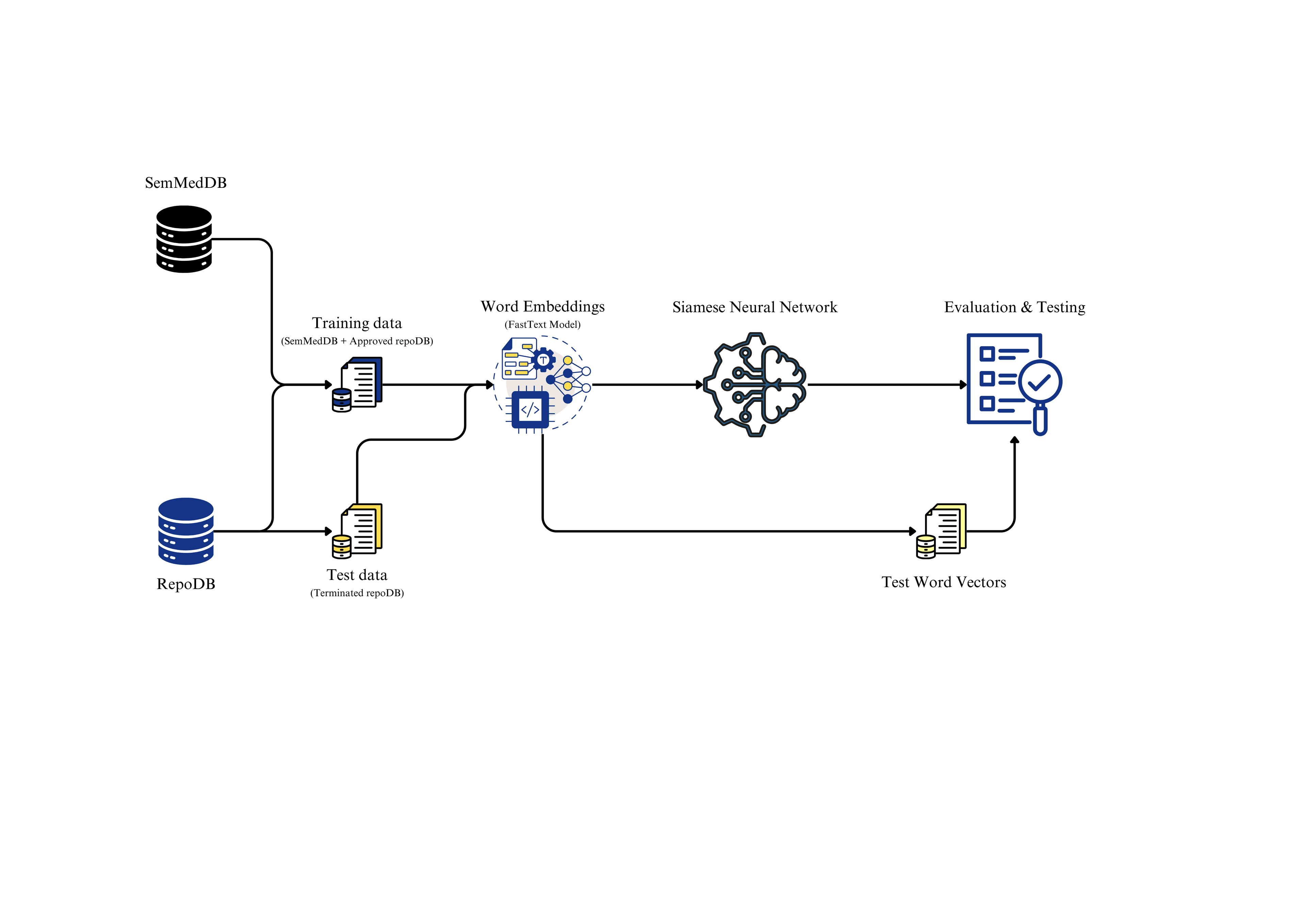
Drug repositioning looks for new therapeutic uses of already-approved drugs — far faster and cheaper than developing one from scratch. My master's thesis framed it as a similarity problem: FastText word embeddings trained on biomedical literature (SemMedDB) and known drug–disease pairs (RepoDB), fed into a Siamese neural network that scores how likely a drug treats a given disease — validated against held-out approved and terminated cases.

Platform · Kaizen Consulting
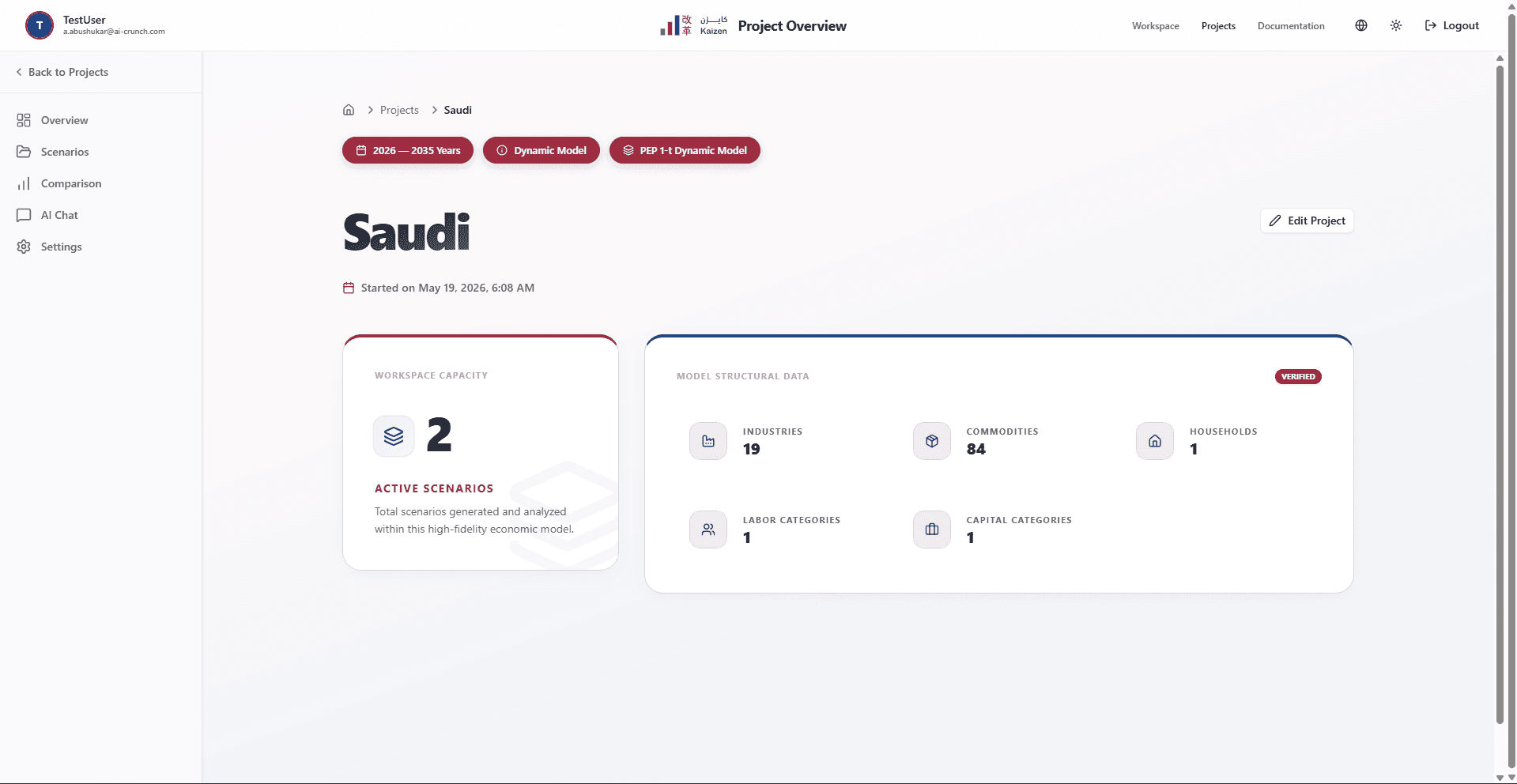
A web platform for computable general equilibrium (CGE) modelling — the economic models that simulate how an entire economy responds to a policy change or shock, sector by sector. Analysts set up scenarios, run them, and compare outcomes through the interface, instead of hand-coding and re-running models for every question.

Platform · Kaizen Consulting
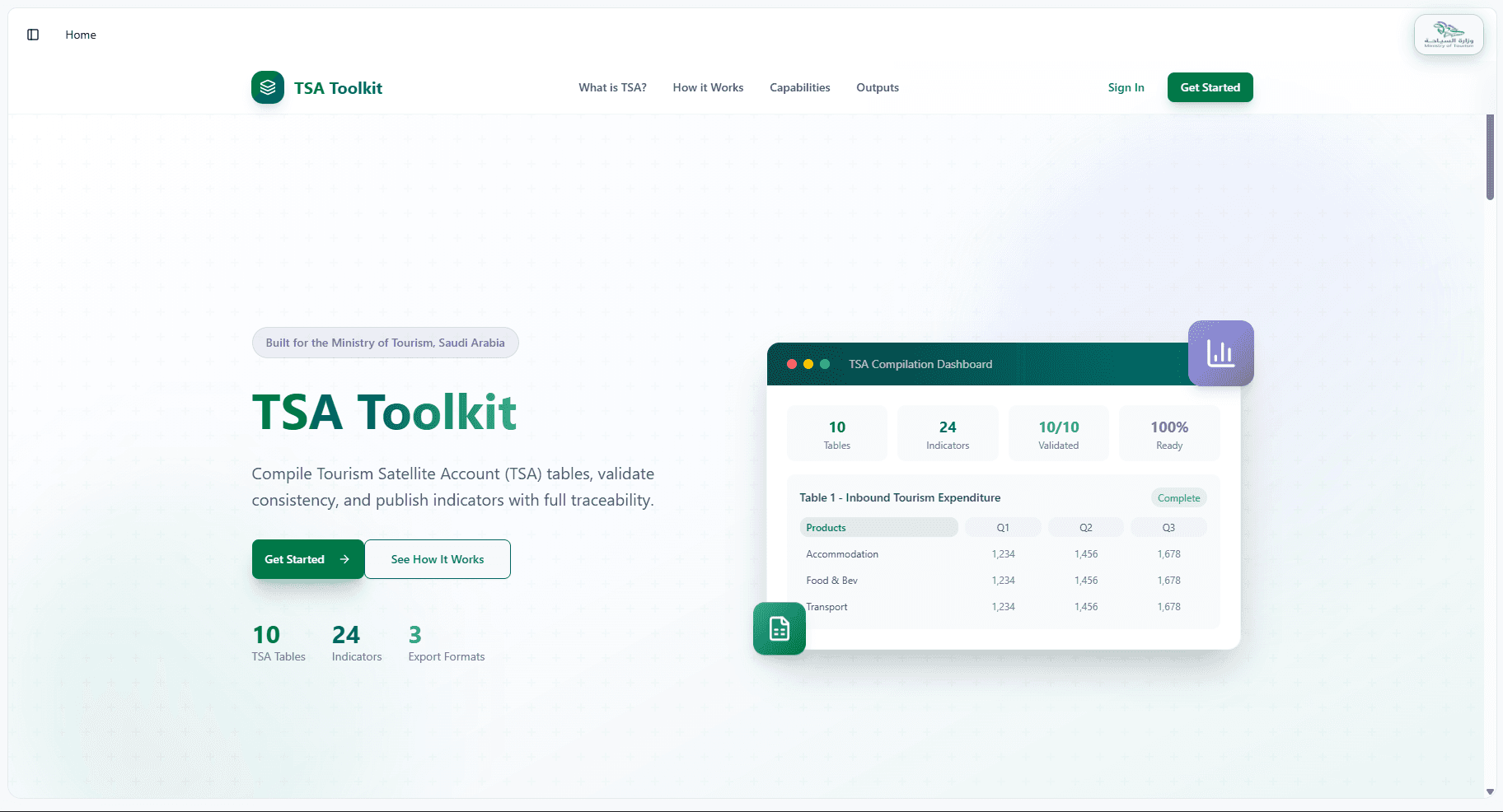
A toolkit built for a Ministry of Tourism to compile its Tourism Satellite Account — the international standard for measuring what tourism contributes to an economy. It assembles the TSA tables, validates them for consistency, and publishes the resulting indicators with full traceability.

Platform · Kaizen Consulting
A platform for the firm's pricing committee — the team that prices project bids. Instead of ad-hoc spreadsheets, they enter the project's scope, the resources it needs, discount rules and more; the platform structures the pricing decision and generates the final bid report, end to end.

Open-source library · GAMS
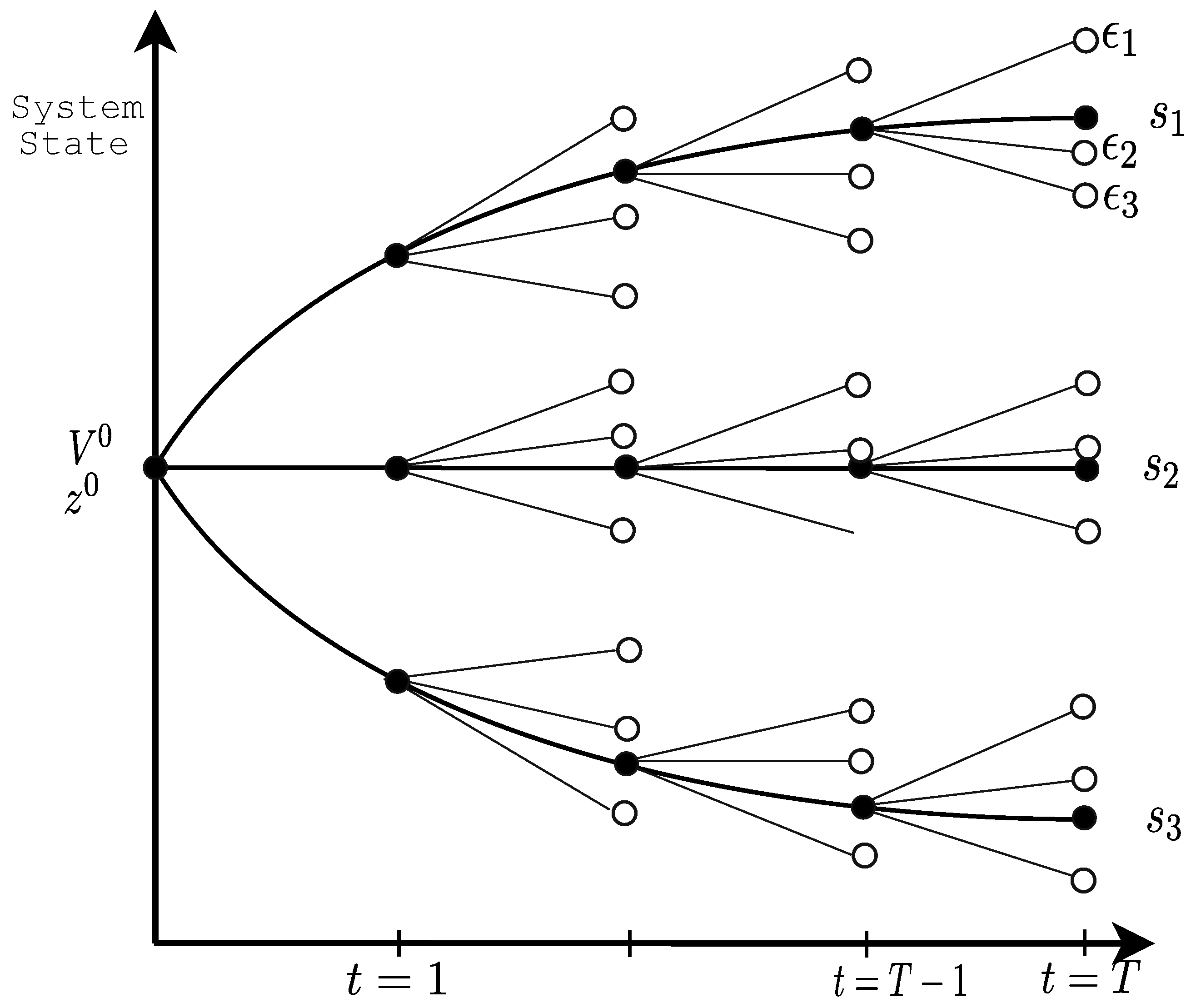
GAMSPy is GAMS's Python library for building large-scale optimization models. As part of the team, I contribute across the library and built SDDP — its stochastic optimization framework, inspired by the Stochastic Dual Dynamic Programming algorithm. It's the tooling for optimizing decisions under uncertainty, where the future branches into many possible scenarios (the tree on the left) and the policy must hedge across all of them.
Two more are live on this page — this site itself, and the Detour game just below. Both built from scratch, and open for you to explore.
The Traveling Salesman Problem asks a deceptively simple question: given a set of cities, what is the shortest loop that visits every one and returns home? It is one of the classic problems in operations research — easy to state, famously hard to solve, and the seed of a whole family of optimization algorithms.
This is its prize-collecting cousin — what optimization calls the Orienteering Problem. Every city is worth points, but your travel budget won't reach them all. Pick the most valuable loop you can afford, then see how close you got to the optimal haul.
Loading today's puzzle…
Or just email me at alqershiahmed20@gmail.com.